Guides · Flagler Beach, Florida
Flagler Beach vs Palm Coast: Which Florida Town to Visit
Flagler Beach is not a quieter Palm Coast. It's a different species of Florida coast town—six miles of orange sand, a single pier, and none of the master-planned growth its neighbor chose.
Why Flagler Beach's Sand Is Orange (and What That Means)
The sand is orange. Crushed coquina shell gives Flagler Beach a color no other stretch of Florida coast has, across six miles broken by one fishing pier. Not a trick of sunset light, and it doesn't wash away after a storm. The coquina is part of the beach itself, ground down into a warm, rust-toned grit that stains the shoreline like weak tea. Walk it barefoot and you'll feel it under your heels—slightly sharper than the fine white sand of the Gulf coast, more honest about what it is.
No condominium towers. No boardwalk concessions. No parade of beachfront commerce. The only interruption is the fishing pier, jutting into the Atlantic as a working structure, not a tourist attraction. This physical character sets Flagler Beach apart from every other stretch of Florida's east coast. You aren't looking at sand that happens to be here. You're looking at a coastline that refused to be smoothed over.
How Flagler Beach Stayed Small While Neighbors Grew
Flagler Beach was incorporated on 16 April 1925, named for Henry Flagler, the oil and railroad magnate who opened Florida's east coast to mass tourism. The naming is almost ironic. Flagler built the hotels and rail lines that turned Florida into a resort, yet the town carrying his name never followed the full trajectory of its neighbors. Built as a beach town, it still is one—low-rise, unincorporated in feel, deliberately undeveloped.
That "unincorporated in feel" is no accident. No high-rise skyline. No gated golf-course communities pressing against the shoreline. Incorporation in 1925 meant a legal boundary, not a promise of growth. The town simply didn't go the way of the resort strips to the south. Choice, geography, or a certain stubbornness—Flagler Beach stayed small while the rest of the coast built up.
Flagler Beach Demographics: A Town of Residents, Not Just Rentals
The census figures tell the story of a town more resident-focused than resort-focused. Of 3,538 total housing units, 795 are held for seasonal or recreational use—about 22 percent. A meaningful seasonal presence, but not a vacation-rental monoculture. Vacant housing units number 1,019, suggesting a town that doesn't need to fill every unit to feel alive.
The permanent population of 5,250 people has a median age of 58.8 years. Mature community, not party town. Median household income is $81,193, with 35.5 percent holding a bachelor's degree or higher. Unemployment sits at 2.9 percent. These aren't the numbers of a struggling beach hamlet. They're the numbers of a place where people choose to live, not just visit. Median home value of $496,800 and median gross rent of $1,581 reflect a real housing market, not a speculative one.
Things to Do in Flagler Beach: Pier, Museum, and First Friday
Beyond the beach, Flagler Beach offers a small, deliberate set of attractions. The fishing pier is the obvious anchor—the only interruption in six miles of sand, where locals and visitors alike cast lines into the Atlantic. Not a carnival pier. A fishing pier. It behaves like one.
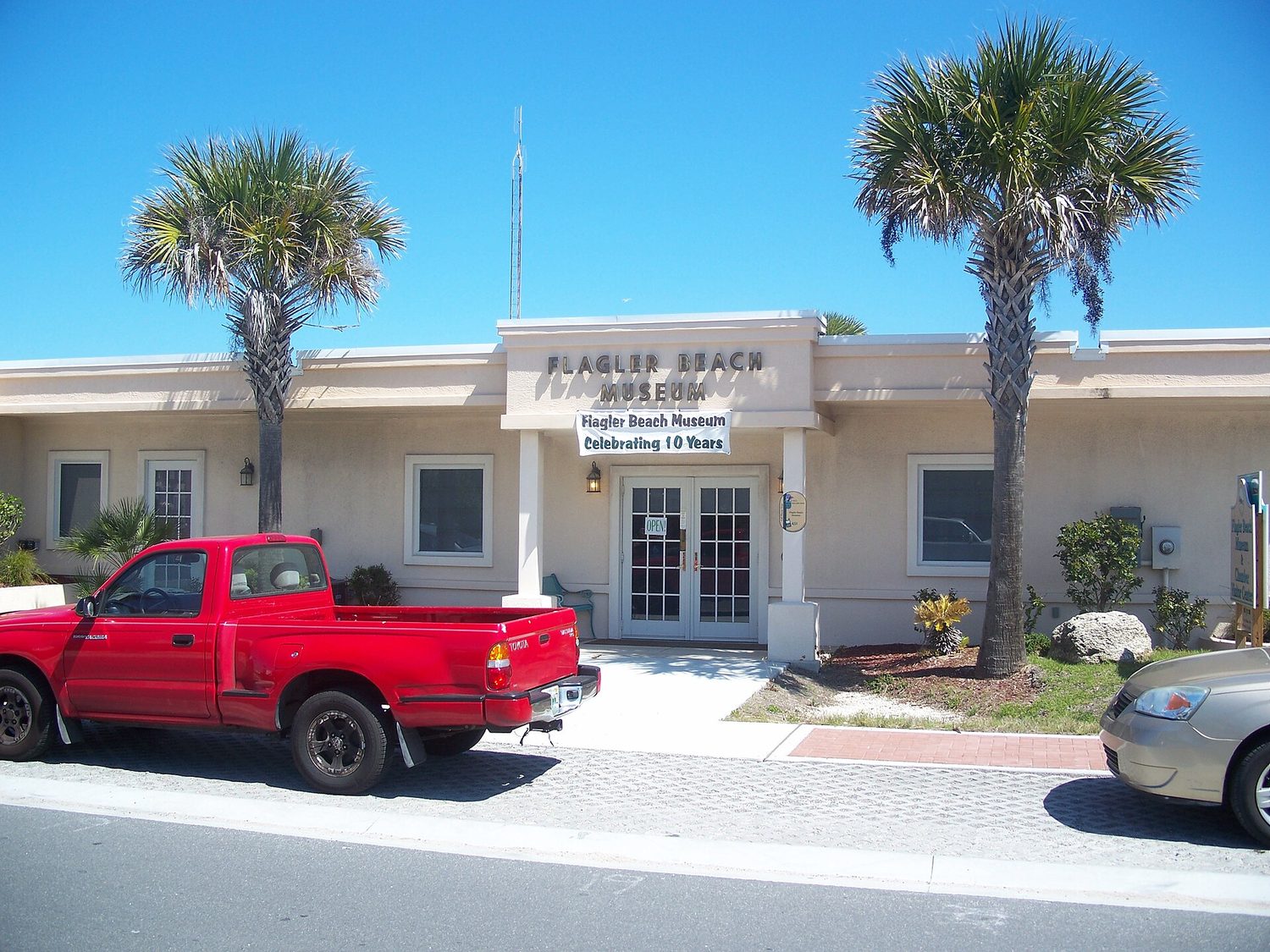
The Flagler Beach Historical Museum provides context for what you're seeing. A modest place to understand the town's past—the 1925 incorporation, the naming after Henry Flagler, the decision to stay low-rise while other towns grew. It won't take all day. An hour, and that's enough.
Then there's First Friday: not annual but monthly, the first Friday of every month from 6pm to 9pm at Veterans Park on South 2nd Street. Free, with music, local vendors, and the beach a block away. This is the town's rhythm—a monthly gathering, not a nightly entertainment district.
Flagler Beach or Palm Coast: Which Fits Your Florida Trip?
Palm Coast, nine miles north, is the counterweight. Where Flagler Beach is deliberately small, Palm Coast is master-planned growth—golf courses, gated communities, engineered waterways. It offers a festival scene Flagler Beach doesn't attempt: the Creekside Music & Arts Festival is a scheduled, organized event with vendors and stages. Flagler Beach's answer is a fishing pier and a monthly park gathering.
Nine miles apart. The philosophical gap is wider. Want beachfront amenities, high-rise views, and a full events calendar? Choose Palm Coast. Want to walk on orange sand, see a working pier, and understand what a Florida beach town looked like before the developers arrived? Choose Flagler Beach.
| Feature | Flagler Beach | Palm Coast |
|---|---|---|
| Beach character | Six miles of orange coquina sand, one fishing pier | Developed coastline, master-planned communities |
| Development style | Deliberately low-rise, unincorporated feel | Planned growth, golf courses, gated communities |
| Signature event | First Friday at Veterans Park (monthly) | Creekside Music & Arts Festival |
| Distance from each other | — | 9 miles north |
| Best for | Unhurried beach time, fishing, history | Festivals, organized activities, resort amenities |
When to Go and What to Bring
Visit Flagler Beach when you want the beach itself to be the main event. The sand doesn't change colour by season, but the town's rhythm does—summer brings families, winter brings a quieter crowd of snowbirds and year-round residents. For the full community experience, time your visit to the first Friday of the month. For the pure beach experience, any day works.
Bring water shoes if you're not used to coquina sand; it's not as soft as the white sand further south. Bring a fishing rod if you want to use the pier. Bring patience if you want to understand the town's character—it doesn't announce itself with signage or attractions. It simply exists, low-rise and unhurried, six miles of orange sand with a single pier breaking the line.
Common questions
- Why is the sand orange in Flagler Beach?
- The sand gets its orange color from crushed coquina shell. It's a shade you won't see anywhere else on Florida's coast, and it stretches for six miles with only one interruption: the fishing pier.
- Is Flagler Beach crowded or built up?
- No, it's deliberately low-rise and undeveloped compared to its neighbors. It was incorporated in 1925 as a beach town and still feels that way, with a small population of 5,250 and a median age of 58.8, giving it an unhurried, protective vibe.
- What is there to do in Flagler Beach?
- You can walk the six miles of orange sand, fish off the pier, or visit the Flagler Beach Historical Museum. On the first Friday of each month from 6pm to 9pm, there's a free event at Veterans Park on South 2nd Street with music and local vendors, just a block from the beach.
- How does Flagler Beach compare to Palm Coast?
- Flagler Beach is a low-rise, deliberately undeveloped beach town, while Palm Coast, 9 miles away, is more residential and hosts the Creekside Music & Arts Festival. Flagler Beach has a median home value of $496,800 and a median household income of $81,193, with an unemployment rate of just 2.9 percent.
- Is Flagler Beach a good place to live or just visit?
- It's both, but note that of its 3,538 housing units, 795 are for seasonal or recreational use, and 1,019 are vacant. The permanent population is 5,250, with a median age of 58.8, so it's quieter and more retirement-oriented than a bustling resort.
- Is there anything else nearby worth seeing?
- Yes, within an hour's drive you can catch events like Sanford Porchfest (48 miles), Great Day in the Country in Oviedo (56 miles), or the Mount Dora Arts Festival and Craft Fair (57 miles). But Flagler Beach itself offers a unique, unhurried coastal experience you won't find elsewhere.
Every business named above is one we hold a listing for, and every date traces to a source on our sources page. We do not describe menus, interiors or service we have not verified. Details change — confirm before you travel.