Guides · Flagler Beach, Florida
What Is Flagler Beach Known For? Orange Sand & Quiet
Flagler Beach is the rare Florida coast town that chose to stay small. The orange sand and the single pier aren't attractions. They're the terms of a quiet civic agreement.
The Orange Sand That No Other Beach Has
Crushed coquina shell makes the sand orange. Ancient shell beds offshore break down and wash in, giving Flagler Beach a colour no other stretch of Florida coast has. Not a tint, not a trick of light—the sand itself is warm coquina-orange, and it runs six miles without interruption. That colour shapes how the town sees itself. Visitors expecting the white sugar-sand of the peninsula's tourist strips miss the point. The orange here is the original condition, not a marketing choice.
One Pier, Not a Boardwalk
Six miles of sand, one interruption: the fishing pier. That's the entire commercial waterfront strategy. No boardwalk lined with chain restaurants. No souvenir stalls. No carnival lights. Just one pier, built for fishing, standing over the water where the beach meets the Atlantic. Neighbouring towns built long promenades. Flagler Beach built a pier and stopped. It's functional first—anglers use it, walkers use it, people who want to be over the water without a boat use it. The only break in the sand, and the town kept it that way on purpose.
A Town That Said No to High-Rise
Flagler Beach was incorporated on 16 April 1925, named for Henry Flagler, the oil and railroad magnate who did more than anyone to turn Florida's east coast into a resort. Unlike the places that took his name and ran, this town built low and stayed low. The census counts 3,538 total housing units. Of those, 795 are held for seasonal or recreational use—about 22 percent, a meaningful share, but not the majority. Another 1,019 units sit vacant. The footprint is small, the skyline flat, the feel deliberately unincorporated. It resists what its neighbours did: the high-rise condos, the resort towers, the wall of glass facing the water. Flagler Beach isn't undeveloped. It's developed at a scale that respects the sand it sits on.
Who Lives Here Now: The Numbers Behind the Quiet
The people who live here are older, settled, comparatively well-off. Median age is 58.8 years—firmly retirement territory. Median household income is $81,193. Median home value, $496,800. Rents run a median of $1,581 a month. Over a third of residents—35.5 percent—hold a bachelor's degree or higher. Unemployment sits at just 2.9 percent. This isn't a town of young professionals or working-class families. It's where people come to stay, often after a career elsewhere, and the built environment reflects that. The high vacancy rate—1,019 units—suggests seasonal rhythms, not a full-time boom.
The Monthly Rhythm: First Friday at Veterans Park
The social calendar runs monthly, not seasonal. On the first Friday of every month, from 6pm to 9pm, Veterans Park on South 2nd Street hosts First Friday. Free, with music, local vendors, and the beach a block away. That last detail matters: the beach is always close, but the event isn't on the sand. It's in a park, a block inland, the ocean audible but not dominant. Early evening, three hours, once a month—it fits the town's unhurried pace. No all-day festival, no multi-stage production. A few hours of music and vendors, then everyone goes home.
Flagler Beach vs. Its Neighbors: A Study in Contrast
The comparison towns tell the story. Palm Coast, nine miles away, hosts the Creekside Music & Arts Festival. Mount Dora, 57 miles south, puts on the Mount Dora Arts Festival and the Mount Dora Craft Fair. Sanford (48 miles) has Porchfest, Oviedo (56 miles) has Great Day in the Country, and Altamonte Springs (59 miles) has Red Hot & Boom. Each is a larger production, a destination event designed to draw crowds from outside. Flagler Beach's answer is a monthly park gathering. That isn't a failure of ambition. It's a choice. The town could have built the boardwalk, stacked the condos, chased the festival circuit. It didn't. It kept one pier, six miles of orange sand, and a monthly evening in a park. The census numbers and the calendar say the same thing: this is a town that measured what it wanted and stopped building when it got there.
Flagler Beach at a Glance: Key Census Figures
| Measure | Value |
|---|---|
| Population | 5,250 people |
| Median age | 58.8 years |
| Total housing units | 3,538 units |
| Homes held for seasonal or recreational use | 795 units |
| Vacant housing units | 1,019 units |
| Median home value | $496,800 |
| Median gross rent | $1,581 |
| Median household income | $81,193 |
| Bachelor's degree or higher | 35.5 percent |
| Unemployment rate | 2.9 percent |
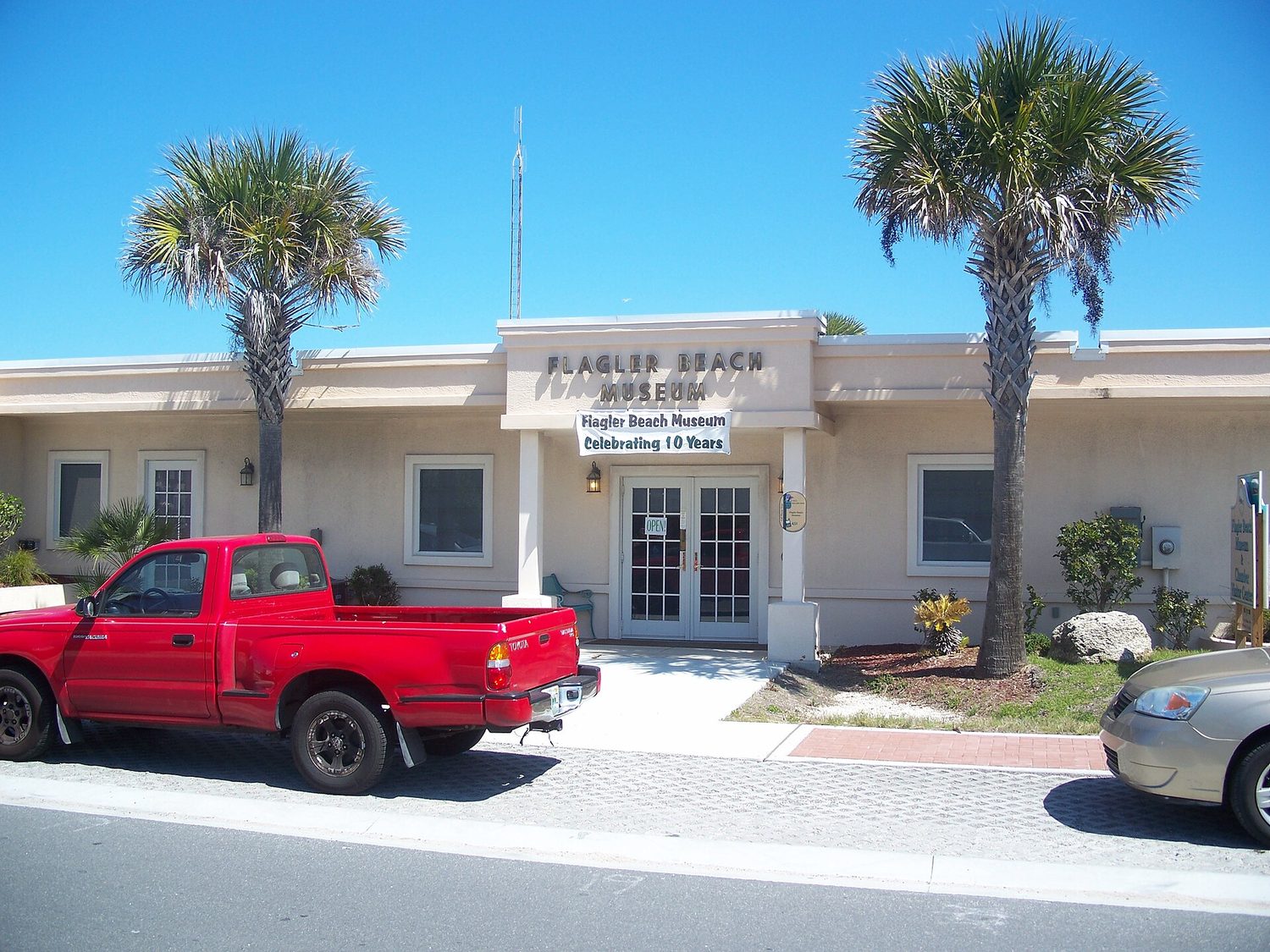
The Flagler Beach Historical Museum stands as a reminder of where this started—a beach town named for the man who built the railroad, incorporated in 1925, then decided it would rather stay itself than become the next version of everything around it. The orange sand is why people come. The low skyline is why they stay.
Common questions
- What is Flagler Beach known for?
- Flagler Beach is known for its six miles of orange coquina sand, the only stretch of Florida coast with that color. It's a low-rise, deliberately undeveloped beach town, interrupted only by a single fishing pier. It was incorporated on April 16, 1925, and named after Henry Flagler.
- Why is the sand orange in Flagler Beach?
- The sand is orange because it's made of crushed coquina shell. This gives Flagler Beach a unique color you won't see anywhere else on Florida's coast, stretching across six miles of beach, broken only by the fishing pier.
- Is Flagler Beach crowded or developed?
- No, Flagler Beach is deliberately undeveloped compared to its neighbors. It has a low-rise, unincorporated feel, with no high-rise resorts. The population is just 5,250 people, with a median age of 58.8, and it's built as a beach town, not a commercial hub.
- What can I do at the Flagler Beach fishing pier?
- The fishing pier is the only interruption in six miles of sand. It's a central spot for fishing and walking, offering direct beach access. You can also visit the Flagler Beach Historical Museum nearby to learn about the town's history.
- What is the First Friday event in Flagler Beach?
- First Friday happens monthly on the first Friday, from 6pm to 9pm at Veterans Park on South 2nd Street. It's free, with music, local vendors, and the beach just a block away. It's a relaxed, community-focused gathering, not a big festival.
- How does Flagler Beach compare to nearby towns for a day trip?
- Flagler Beach is more laid-back and less developed than nearby Palm Coast, which is 9 miles away and hosts the Creekside Music & Arts Festival. For bigger events, you'd drive 48-59 miles to Sanford, Oviedo, Mount Dora, or Altamonte Springs, but Flagler Beach itself offers a quiet, uncrowded beach experience.
Every business named above is one we hold a listing for, and every date traces to a source on our sources page. We do not describe menus, interiors or service we have not verified. Details change — confirm before you travel.