Guides · Flagler Beach, Florida
How Flagler Beach Got Its Name
The name on the map was not an accident, and it was not a tribute to the sand. It was a piece of marketing, set in concrete by a railroad man who never lived here.
A Name Borrowed from a Tycoon
Flagler Beach was incorporated on 16 April 1925, and it took its name from Henry Flagler, the oil and railroad magnate who did more than anyone to turn Florida's east coast into a resort. His trains pushed south, his hotels rose where swamp had been, and the entire Atlantic shoreline of the state became a product to be sold. This town was part of that pitch.
The name stuck. The ambition did not.
What the Name Did Not Buy
Flagler built a resort empire. Flagler Beach, for all its borrowed branding, was built as a beach town and still is one. It is low-rise, unincorporated in feel, and deliberately undeveloped compared with its neighbours. The census numbers tell the story of a place that refused the high-rise script.
The population sits at 5,250 people. The median age is 58.8 years. There are 3,538 total housing units, and 1,019 of them sit vacant. A full 795 units are held for seasonal or recreational use. This is not a town of newcomers stacking into towers. It is a town of people who come for the water, and leave the skyline alone.
The median home value is 496,800 dollars. The median gross rent is 1,581 dollars. The median household income is 81,193 dollars, and the unemployment rate is 2.9 percent. More than a third of residents, 35.5 percent, hold a bachelor's degree or higher. These are not boomtown figures. They are the numbers of a settled, older, quietly comfortable place.
The Sand That Names Itself
The colour does the real work. Crushed coquina shell gives Flagler Beach a shade no other stretch of Florida coast has, across six miles broken by a single fishing pier. The sand is orange. It is not a trick of the light. It is ground-up shell, the same material that built the old coquina forts further south, and it turns the beach into something you can recognise from a distance.
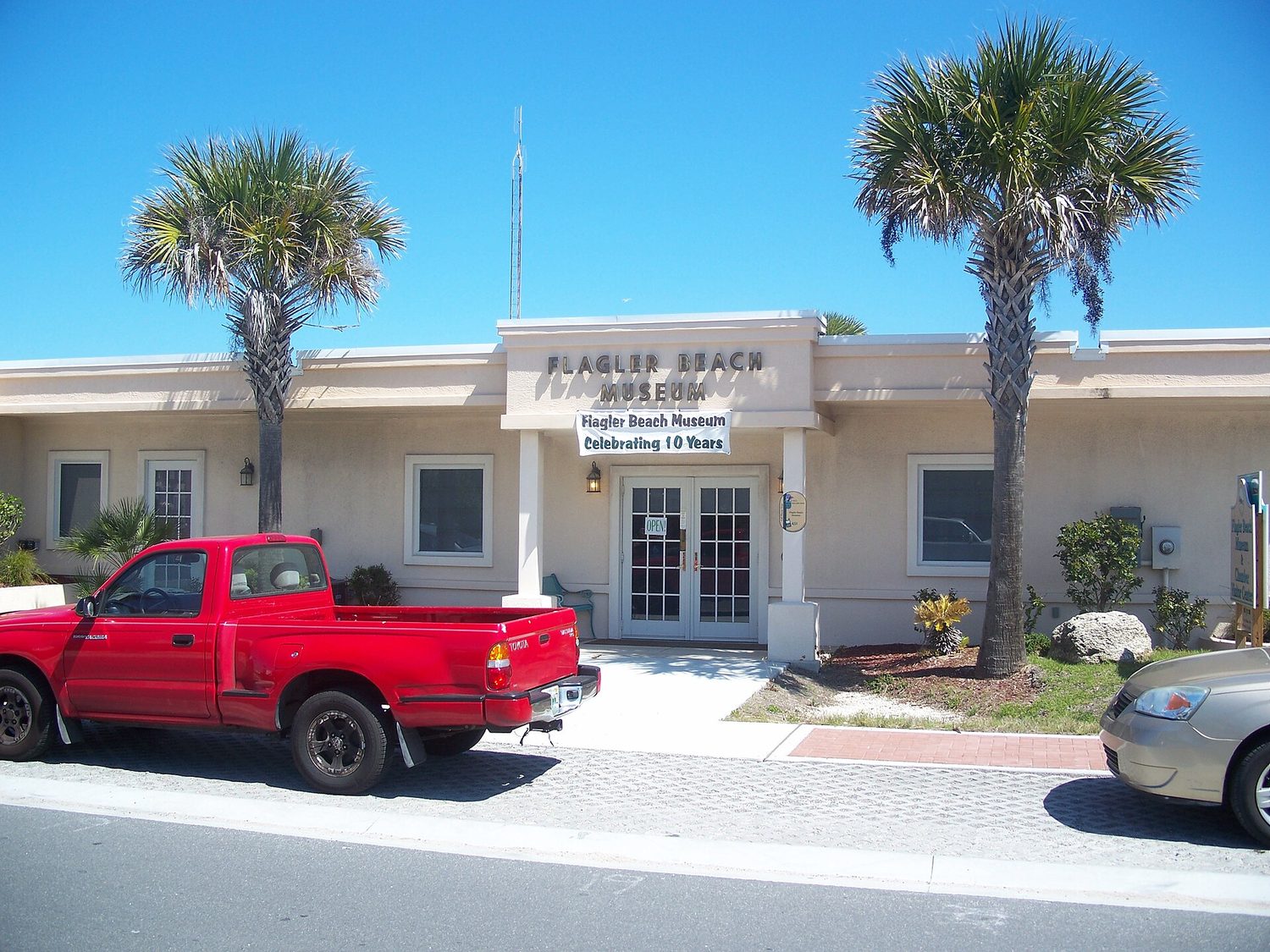
That orange runs for six miles. The only interruption is the fishing pier, a single wooden line of walkers and rods jutting into the Atlantic. No condos break the run. No high-rise shadows fall across the shoreline. The town's own history is kept in the Flagler Beach Historical Museum, a modest building that holds the local story without the need for a grand plaza.
A Name That Outgrew Its Source
Henry Flagler gave this town its name, but he gave it nothing else. He did not build here. He did not live here. His hotels were elsewhere, his fortune was spent on other beaches. What Flagler Beach got from him was a label, and what it did with that label was ignore the instructions.
The neighbours built up. This town stayed low. The neighbours chased the seasonal dollar. This town took the seasonal units, 795 of them, and kept the rest for itself. The vacancy rate, at 1,019 units, suggests a place that does not need to fill every room to feel alive. It is comfortable with empty space.
That is the real legacy of the name. It was meant to sell a resort. Instead, it marks a town that took a tycoon's branding and turned it into a quiet refusal. The orange sand does the advertising now. The pier does the architecture. And the name, for all its grand origins, belongs to a place that never needed Henry Flagler to exist.
Every business named above is one we hold a listing for, and every date traces to a source on our sources page. We do not describe menus, interiors or service we have not verified. Details change — confirm before you travel.