Guides · Flagler Beach, Florida
Living in Flagler Beach: What to Know Before Moving
Flagler Beach is six miles of orange, coquina-crushed sand with a single pier, and a low-rise skyline that says no to everything its neighbors said yes to.
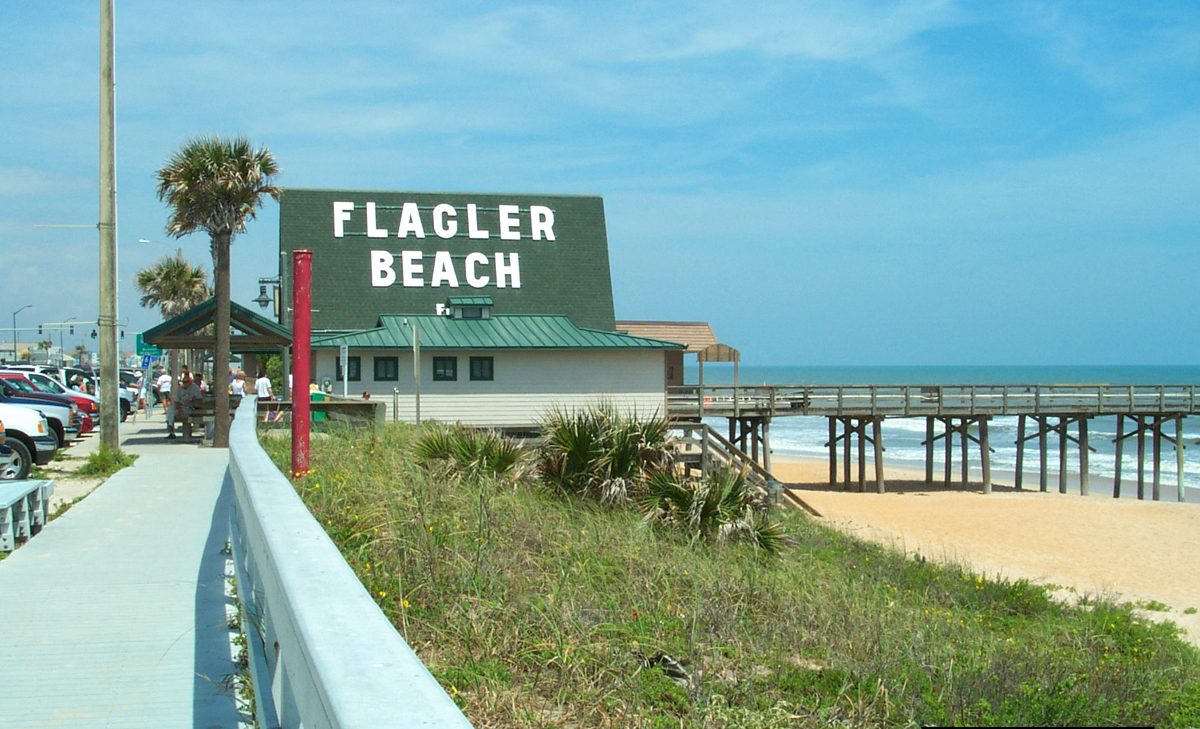
The Orange Sand and the Single Pier
The color hits you first. Crushed coquina shell gives Flagler Beach a shoreline no other stretch of Florida coast has—a warm, rust-orange band running the full six miles. Not the white-sugar sand of the Gulf. Not the pale Atlantic beaches farther south. It is specific, local, and slightly odd, and it sets the tone for the whole town.
The only interruption in those six miles is the fishing pier. One pier. No boardwalk, no cluster of high-rise condos, no amusement rides. Just a single wooden structure reaching into the surf, and it has been the defining landmark since the town was built around it.
A Town That Said No to High-Rises
Flagler Beach was incorporated on 16 April 1925, named for Henry Flagler, the oil and railroad magnate who turned Florida's east coast into a resort destination. But the town that carries his name did not follow his playbook. It stayed low. It stayed small. It feels unincorporated, almost rural at the edges, and it is deliberately undeveloped compared with what went up around it.
The housing data backs this up. Flagler Beach has 3,538 total housing units—not tens of thousands. No sprawling subdivisions. No rows of identical rental towers. The median home value is $496,800, which is not cheap, but you are paying for proximity to that orange sand, not for a resort lifestyle. Median gross rent is $1,581, moderate for coastal Florida. There is simply not much here to build on, and the town has kept it that way.
Who Lives Here Now: Numbers and Ages
The population is 5,250 people, and the median age is 58.8 years. This is not a spring-break town. It is not even a young-families town, really. It is a place where people come to slow down, often after decades of working somewhere else.
The unemployment rate is 2.9 percent, which is low, and the median household income is $81,193. More than a third of residents—35.5 percent—hold a bachelor's degree or higher. A comfortable, educated, older population. Not wealthy in the Palm Beach sense, but stable.
The age and income profile explains a lot about the town's character. You do not get late-night bars or a buzzing club scene with a median age near 60. You get quiet mornings, early dinners, and a pace that feels deliberate.
The Rhythms of a Small Beach Town
For newcomers, the social calendar is built around one recurring event: First Friday. On the first Friday of every month, from 6pm to 9pm, Veterans Park on South 2nd Street fills with music, local vendors, and people who actually know each other. The beach is one block away. It is free, it is low-key, and it is the closest thing this town has to a night out.
No big festival season. No massive crowds descending for a single weekend. The Flagler Beach Historical Museum offers a quiet way to understand what this place was before the condos went up elsewhere. And the pier itself is the main attraction—fishing, walking, watching the water change color as the sun moves.
Living With the Seasons: Full-Time vs. Part-Time
The census numbers tell the real story of how this town works. Of the 3,538 housing units, 795 are held for seasonal or recreational use. Another 1,019 are vacant—not abandoned, but empty for much of the year. That means roughly half the housing stock is not occupied full-time.
For year-round residents, this creates a rhythm. In season, the town fills with snowbirds and weekenders. The pier gets busier, the beach has more towels, and the few restaurants do steady business. Off-season, the streets empty out. The 5,250 permanent residents spread back out, and the town returns to its default state: quiet, unhurried, and a little bit protective of its own space.
This is not for everyone. If you want year-round energy, a constant hum of activity, this is the wrong coast. But if you like knowing your neighbors, having the beach almost to yourself on a Tuesday morning, and watching the seasons change the town's mood, it works.
Beyond the Beach: Day Trips Into the Interior
Flagler Beach is not isolated, but it is also not a cultural hub. For bigger events, residents drive. The nearby towns and their festivals offer options without requiring a major relocation.
| Flagler Beach at a Glance | |
|---|---|
| Population | 5,250 |
| Median age | 58.8 years |
| Median household income | $81,193 |
| Median home value | $496,800 |
| Median gross rent | $1,581 |
| Bachelor's degree or higher | 35.5% |
| Unemployment rate | 2.9% |
| Total housing units | 3,538 |
| Seasonal/recreational homes | 795 |
| Vacant housing units | 1,019 |
Palm Coast, 9 miles north, hosts the Creekside Music & Arts Festival. Sanford, 48 miles west, has Sanford Porchfest. Oviedo, 56 miles away, puts on the Great Day in the Country. Mount Dora, 57 miles inland, runs both the Mount Dora Arts Festival and the Mount Dora Craft Fair. Altamonte Springs, 59 miles south, does Red Hot & Boom for the Fourth of July.
None of these are regular weekend habits. They are day trips, occasional excursions for when the quiet of Flagler Beach gets a little too quiet. And that is the trade-off. You live in a town that resisted what its neighbors became—low-rise, orange-sand, unpretentious—and you drive when you want the crowds, the festivals, and the noise. The pier stays empty. The beach stays orange. And the town stays exactly what it chose to be.
Common questions
- Why is the sand in Flagler Beach orange?
- The sand is orange because it's made of crushed coquina shell. This gives Flagler Beach a color no other stretch of Florida coast has, across six miles broken only by a single fishing pier.
- Is Flagler Beach crowded or full of high-rises?
- No. Flagler Beach is deliberately undeveloped compared with its neighbors. It's low-rise, unincorporated in feel, and still a beach town. The only interruption in six miles of sand is the fishing pier.
- What is there to do in Flagler Beach?
- You can visit the Flagler Beach Historical Museum, fish or walk the pier, and enjoy the beach. On the first Friday of every month, from 6pm to 9pm, there's a free event at Veterans Park on South 2nd Street with music and local vendors.
- How old is Flagler Beach?
- Flagler Beach was incorporated on April 16, 1925. It's named for Henry Flagler, the oil and railroad magnate who helped turn Florida's east coast into a resort. It was built as a beach town and still is one.
- What's the cost of living like in Flagler Beach?
- The median home value is $496,800, and median gross rent is $1,581. Median household income is $81,193. About 35.5% of residents have a bachelor's degree or higher, and unemployment is low at 2.9%.
- Is Flagler Beach a good place to retire?
- The median age is 58.8 years, and many homes are for seasonal use—795 of 3,538 units. With a low-rise, quiet beach town feel and a fishing pier, it attracts retirees. But note 1,019 housing units are vacant, so it's not densely packed.
Every business named above is one we hold a listing for, and every date traces to a source on our sources page. We do not describe menus, interiors or service we have not verified. Details change — confirm before you travel.