Guides · Flagler Beach, Florida
The History of Flagler Beach in 6 Landmarks
The pier is the town's one straight line; everything else here curves, slows, or stops.
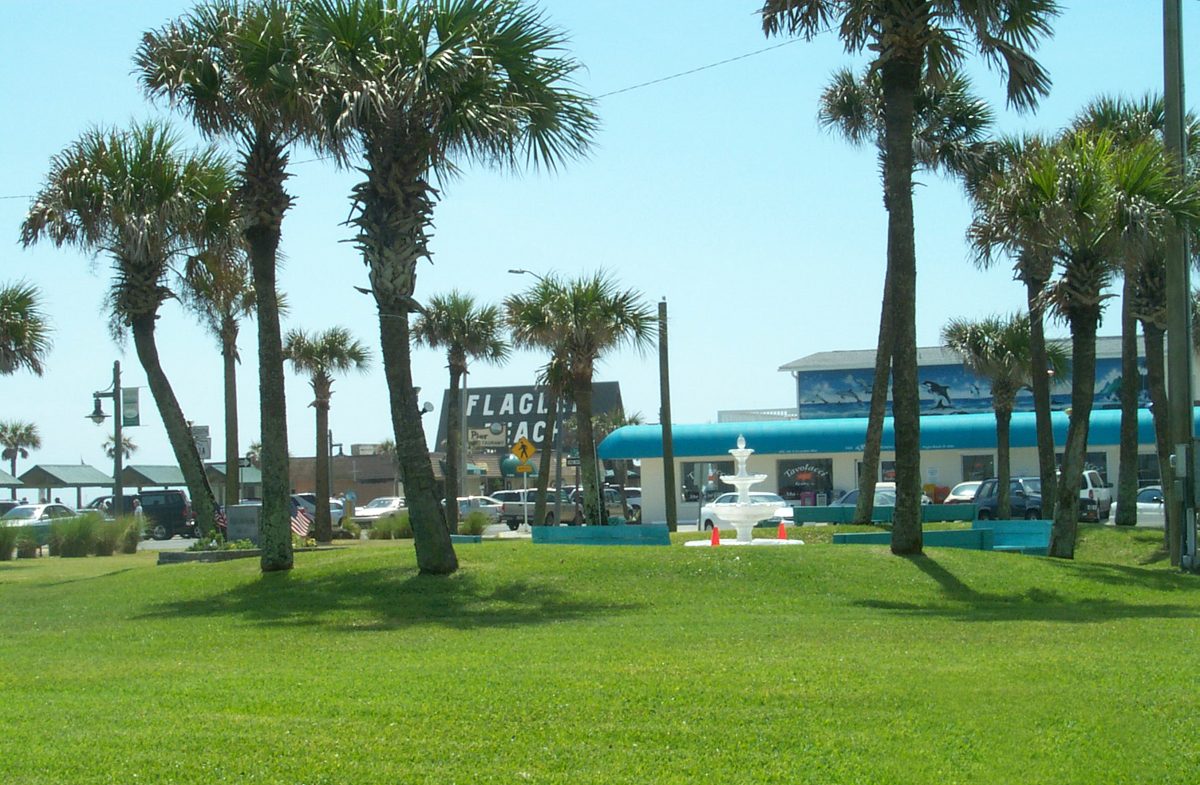
A Name That Arrived Before the Town
Flagler Beach was incorporated on 16 April 1925, but the name had already done its work. Henry Flagler, the oil and railroad magnate, pushed his rail line down Florida's east coast and turned a mangrove fringe into a resort chain. The town took his name, not his blueprint.
What Flagler built elsewhere was vertical. This town stayed horizontal. Six miles of coquina-orange sand, interrupted once, by a fishing pier. The crushed shell gives the beach a colour no other stretch of Florida coast has—rust, apricot, burnt sienna, depending on the light. It is not a pastel. It is a mineral fact.
The Six Miles
The sand itself is the first landmark. Coquina shell, crushed by tide and time, mixes with quartz to produce that orange. It is not dyed, not trucked in, not a marketing decision. It is geology.
Walk it. The beach runs roughly six miles, and the only thing that breaks the line is the pier. No seawalls marching down the shore. No high-rise shadows at four in the afternoon. The town resisted what its neighbours did, and the beach shows it.
The numbers back the feeling. For a town of 5,250 people, there are 3,538 housing units—but 1,019 of those sit vacant. A third of the housing stock is not full-time. Another 795 units are held for seasonal or recreational use. This is a place people come to, not a place people stack into.
The Pier
One interruption. That is the entire design.
The fishing pier is the town's only vertical gesture, and even it is modest. It reaches into the Atlantic like a question mark. Anglers line the rails. Pelicans treat it as a parking spot. The pier does not sell anything except the chance to stand over water.
It is also the town's clock. When the pier is busy, it is summer. When it is empty, it is a Tuesday in January, and the wind is doing the talking. The pier has seen storms, repairs, and the quiet patience of people who fish. It remains the single built interruption in six miles of sand.
The Flagler Beach Historical Museum
The museum sits a block off the beach, in a building that used to be something else—that is the pattern here. It holds the town's memory: the incorporation, the early beach cottages, the railroad that brought the name but not the skyline.
The museum does not need to invent drama. The facts are enough. A town incorporated on 16 April 1925, named for a man who never lived here. A beach that kept its colour. A pier that kept its monopoly on the horizon.
Visit the museum first if you want context. Then walk the beach. The order matters, because the beach will make more sense once you know what it was saved from.
The Houses, Such as They Are
The residential streets behind the beach are the fifth landmark, though you will not find them on a map of attractions.
Median home value is $496,800. Median gross rent is $1,581. Those numbers tell a story: people own here, and they rent here, but nobody is getting rich off density. The median age is 58.8 years. This is not a spring-break town. It is not a retirement tower either. It is a place where people come to slow down, and the housing stock reflects that.
35.5 percent of residents hold a bachelor's degree or higher. The unemployment rate is 2.9 percent. Median household income is $81,193. These are not boomtown numbers. They are steady, unhurried, and slightly above the state average. The town works because it is not trying to impress anyone.
The Empty Lots
The 1,019 vacant housing units are a landmark too, even if no one plaques them.
They are the pause between sentences. They keep the town from feeling crowded. They are why you can stand on the beach in February and hear the ocean without a soundtrack of air conditioners. Flagler Beach is deliberately undeveloped compared with its neighbours, and the vacancies are proof of intention.
Some of those units are waiting for someone. Some are waiting for nothing. Either way, they keep the skyline low and the pace slow.
The Orange Itself
The final landmark is not a place. It is the colour.
Crushed coquina shell gives Flagler Beach an orange that changes with the sun. At noon it is pale, almost pink. At sunset it glows like the inside of a conch. No other stretch of Florida coast has this. You will not find it in Daytona or St. Augustine or Palm Coast. It belongs to these six miles.
The colour is why people come. The pier is why they stay. The museum is why they understand. The empty lots are why they can breathe.
A Town That Kept Its Shape
Incorporated in 1925, named for a railroad man, built as a beach town and still one. The pier is the only interruption. The sand is the only colour. The museum is the only institution that tries to explain it.
Flagler Beach did not need to become a resort. It already was one, in the old sense: a place to be, not a place to be impressed by. The sand is orange, the buildings are low, and the pier is just a pier.
That is the whole history. That is the whole town. Nothing hidden, nothing secret, nothing for sale except the chance to stand on orange sand and watch the water do what it has always done.
Every business named above is one we hold a listing for, and every date traces to a source on our sources page. We do not describe menus, interiors or service we have not verified. Details change — confirm before you travel.