Guides · Flagler Beach, Florida
Why Flagler Beach Is Where It Is
The town’s name is the easy part. The harder question is why it stayed so small.
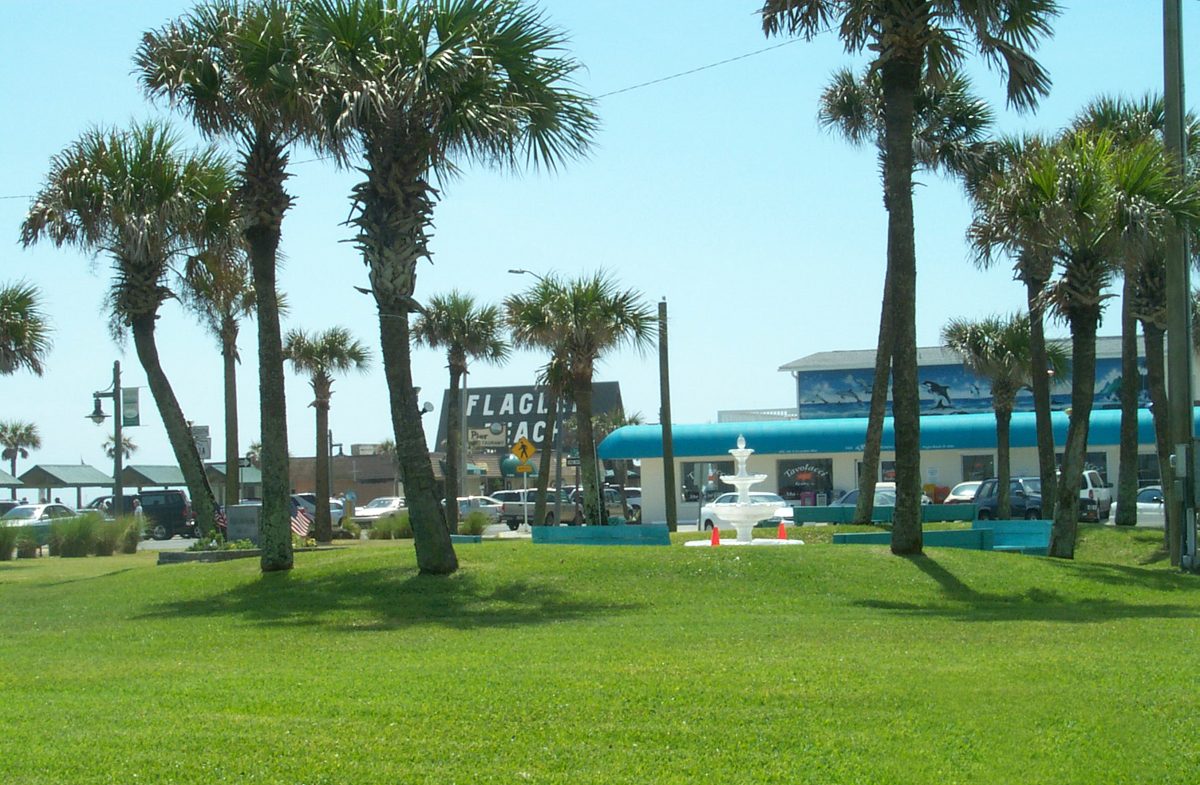
A Name Borrowed From a Tycoon
Flagler Beach was incorporated on 16 April 1925, and the name was a gift to Henry Flagler, the oil and railroad magnate who did more than anyone to turn Florida’s east coast into a resort. He built the tracks and the hotels that dragged the state into the twentieth century. His name is on the town, but the town never quite followed his blueprint.
Flagler’s model was density. Grand hotels, winter colonies, manicured lawns running down to the water. Flagler Beach went the other way. It was built as a beach town and still is one—low-rise, unincorporated in feel, and deliberately undeveloped compared with its neighbours. The neighbours to the south and north got the towers. This town resisted what its neighbours did.
Six Miles of Orange
The sand is orange. Crushed coquina shell gives Flagler Beach a colour no other stretch of Florida coast has, across six miles broken by a single fishing pier. The pier is the only interruption in six miles of sand. That is the whole geography of the place: six miles, one pier, and a colour you cannot find anywhere else on the state’s shoreline.
That colour is the first thing you notice. It is not the white sand of the postcards or the grey shell of the Panhandle. It is a warm, rusted orange, and it changes with the light. In the morning it looks like pale brick. By late afternoon it glows. The coquina is crushed shell and ancient stone, and it gives the beach a texture that is slightly rough underfoot, not the fine powder you get elsewhere.
The pier is the town’s only vertical interruption. It is a working pier, not a monument. People fish from it. People walk to the end of it and look back at a skyline that is barely there. That is the point.
The Numbers Behind the Quiet
The census figures tell the story better than any brochure. The population is 5,250 people, and the median age is 58.8 years. This is not a town of young families or snowbirds in a hurry. It is a town of people who chose to be here, many of them later in life, and they have the patience to match the pace.
There are 3,538 total housing units, and 1,019 of them are vacant. That is a high vacancy rate, and it is not a sign of decline. It is a sign of seasonal rhythm. The town swells and shrinks with the weather. Of those units, 795 are held for seasonal or recreational use. Nearly a quarter of the housing stock is essentially a second home, which means the town is full of people who are here because they want to be, not because they have to be.
The median home value is $496,800, and the median gross rent is $1,581. Those are not cheap numbers for a town this size, but they are cheaper than the beachfront metros to the south. The median household income is $81,193, and the unemployment rate is 2.9 percent. That is a working town with a cushion.
Educated and Unhurried
The education numbers are striking: 35.5 percent of residents hold a bachelor’s degree or higher. That is a well-read population, and it shows in the town’s character. This is not a place that got left behind. It is a place that chose to stay put.
The Flagler Beach Historical Museum sits in the middle of it all, a small building that holds the town’s memory. It is not a grand institution. It is a local collection, the kind of place where the docent knows the names on the photographs. That is the town in miniature: modest, specific, and rooted.
The Point of Staying Small
The reason Flagler Beach is where it is has less to do with geography than with temperament. The location was obvious—a stretch of coast between the big cities, with the railroad running through it. Henry Flagler’s name gave the town its identity, but the people who settled it gave it its shape.
They did not build up. They built out, low and slow. They kept the pier as the only interruption in the sand. They let the coquina stay orange instead of paving over it. They resisted the resort economy that swallowed their neighbours, and they are still resisting it.
The vacancy rate and the seasonal homes might look like a weakness on paper. In practice, they are a buffer. The town is never overcrowded, never overbuilt, never desperate for the next tourist dollar. It has the luxury of being unimpressive to developers and invaluable to the people who live there.
That is why Flagler Beach is where it is. Not because of the railroad or the magnate or the beach itself, though all of those helped. It is there because the people who came after Henry Flagler decided that a small town on an orange beach, with one pier and no skyline, was enough. They were right.
Every business named above is one we hold a listing for, and every date traces to a source on our sources page. We do not describe menus, interiors or service we have not verified. Details change — confirm before you travel.