Guides · Flagler Beach, Florida
What Has Changed in Flagler Beach, FL
Flagler Beach was incorporated on 16 April 1925. The census data since then suggests it has spent the century deciding not to become what its neighbours did.
Why Flagler Beach's Orange Sand Defines Its Character
The sand is orange because it is crushed coquina shell. No other stretch of Florida coast has that colour. Six miles of it run through Flagler Beach, interrupted once, by a fishing pier. That is the whole physical argument of the town: a low-rise, deliberately undeveloped waterfront that residents have protected against the pattern of high-rise resorts and boardwalks defining so much of the state's east coast. The pier is not an attraction bolted onto the beach; it is the single functional break in a long, quiet line of sand. The town was named for Henry Flagler, the oil and railroad magnate who did more than anyone to turn Florida's east coast into a resort. It has spent the century since resisting the very thing he made possible.
Flagler Beach Demographics: A Stable, Older Community
The numbers describe a place that is older, smaller, and more stable than the resort towns around it. Flagler Beach has 5,250 people, with a median age of 58.8 years. Of the 3,538 total housing units, 795 are held for seasonal or recreational use, and 1,019 sit vacant. That vacancy rate is not a sign of decline; it is the shape of a town that does not need to fill every unit to feel complete. The median home value is $496,800, the median gross rent is $1,581, and the median household income is $81,193. The unemployment rate is 2.9 percent, and 35.5 percent of residents hold a bachelor's degree or higher.
| Measure | Figure |
|---|---|
| Population | 5,250 |
| Median age | 58.8 years |
| Total housing units | 3,538 |
| Homes held for seasonal or recreational use | 795 |
| Vacant housing units | 1,019 |
| Median home value | $496,800 |
| Median gross rent | $1,581 |
| Median household income | $81,193 |
| Unemployment rate | 2.9 percent |
| Bachelor's degree or higher | 35.5 percent |
This is not a town of young families chasing school districts or newcomers flipping condos. It is a town of people who chose the quiet. They bought in because the skyline was low and the beach was orange, and they are willing to pay a premium for the restraint.
The Single Fishing Pier: Flagler Beach's Only Break in the Sand
The fishing pier is the only break in six miles of sand. That is not a marketing line; it is a literal description of the coastline. There is no second pier, no cluster of waterfront high-rises, no boardwalk with chain restaurants. The pier exists for fishing, for walking out over the water, for the simple act of being on the ocean without a commercial agenda. It is the town's most prominent structure—and it is modest. That is the point. Flagler Beach's waterfront is functional, not spectacular, and the town treats that as a feature rather than a failure.
First Friday in Flagler Beach: A Low-Key Monthly Gathering
Once a month, the town gathers at Veterans Park on South 2nd Street for First Friday, from 6pm to 9pm. It is free, with music and local vendors, and the beach is a block away. That proximity is the whole character of the event: you do not drive to a festival district; you walk from the sand to a park and back. It is a monthly, not annual, rhythm. Deliberately low-key.
How Nearby Florida Towns Developed Differently
The contrast with nearby towns is instructive. Palm Coast, nine miles away, hosts the Creekside Music & Arts Festival. Sanford, 48 miles south, has Porchfest. Oviedo, 56 miles away, runs Great Day in the Country. Mount Dora, 57 miles off, holds both the Mount Dora Arts Festival and the Mount Dora Craft Fair. Altamonte Springs, 59 miles away, puts on Red Hot & Boom. These are larger events in towns that have embraced the festival model, the tourist draw, the development that follows. Flagler Beach's answer is a free monthly gathering in a park one block from the beach. The town could have become Palm Coast. It chose not to.
The Museum and the Memory of a Name
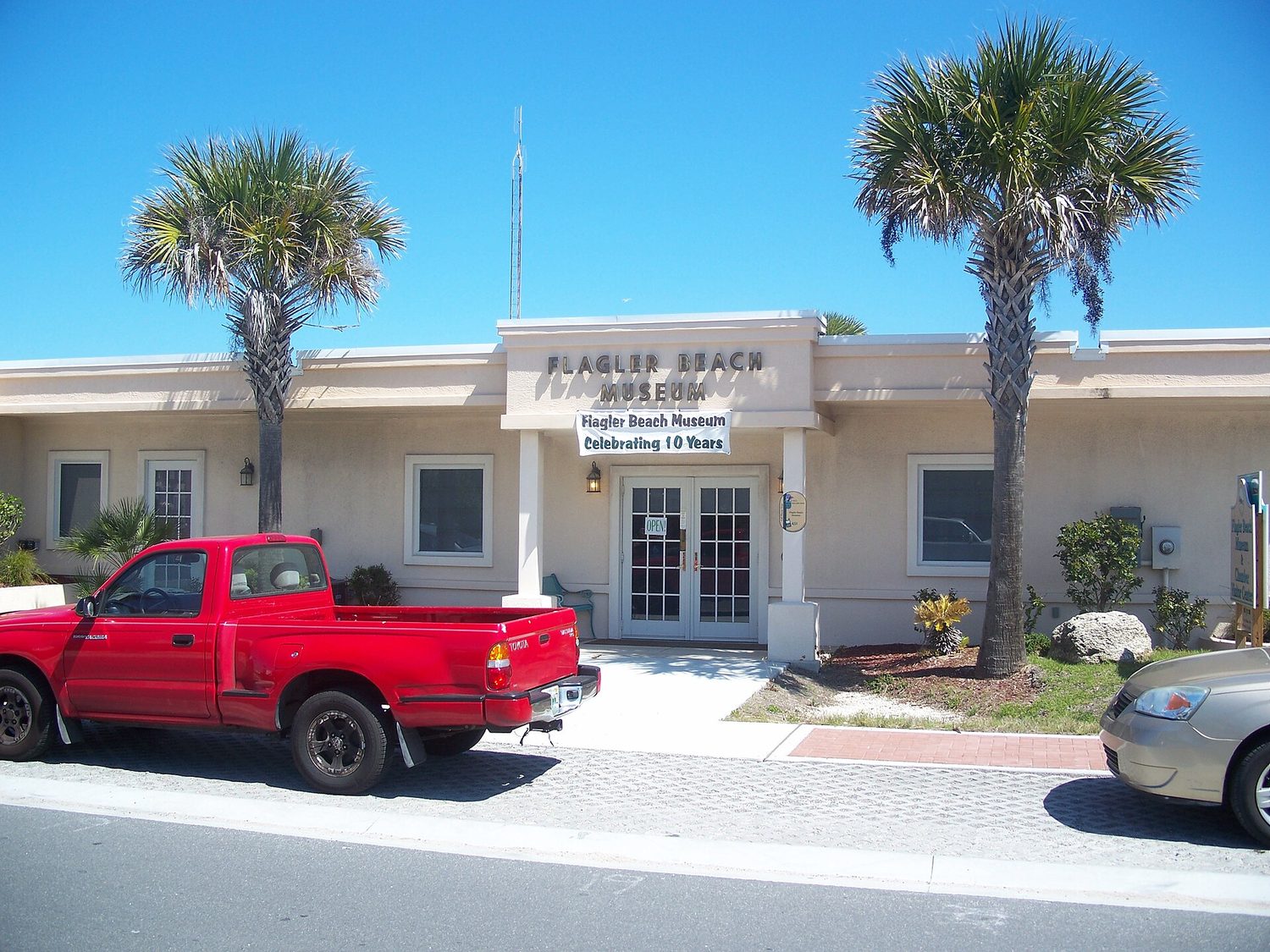
The Flagler Beach Historical Museum holds the town's memory, and that memory begins with a name. Henry Flagler built the railroad that opened Florida's east coast to resort development, and the town that took his name was incorporated on 16 April 1925 as a beach town. It still is one. The museum is not a grand institution; it is a local one, the kind of place that preserves photographs and documents and tells the story of a town that did not follow the trajectory of its namesake's ambitions. Flagler built resorts; Flagler Beach stayed low-rise. The museum is the quiet keeper of that contradiction.
The census data, the single pier, the orange sand, the monthly park gathering—they all point the same direction. Flagler Beach is a place that has changed less than its neighbours and is protective of that fact. For someone seeking a quiet, low-rise coast, it is not just a good place to live or visit. It is the rare place in Florida where the development never won.
Common questions
- Why is the sand orange in Flagler Beach?
- Crushed coquina shell gives the sand its orange color. It's a unique feature across six miles of beach, broken only by a single fishing pier. No other stretch of Florida's coast has this shade.
- Is Flagler Beach crowded or built up?
- No. It's deliberately low-rise and undeveloped compared to its neighbors. With a population of 5,250 and a median age of 58.8, it keeps an unincorporated, small-town feel. The town was incorporated in 1925 and has resisted high-rise growth.
- What is there to do in Flagler Beach?
- You can visit the fishing pier, the only interruption in six miles of sand, or the Flagler Beach Historical Museum. On the first Friday of each month, from 6pm to 9pm, there's a free event at Veterans Park on South 2nd Street with music and local vendors.
- How much does it cost to live in Flagler Beach?
- The median home value is $496,800, and the median gross rent is $1,581. The median household income is $81,193. About 35.5% of residents hold a bachelor's degree or higher, and the unemployment rate is just 2.9%.
- Is Flagler Beach a good place for a vacation home?
- Out of 3,538 total housing units, 795 are held for seasonal or recreational use, and 1,019 are vacant. That suggests a notable share of homes are second or vacation properties. The beach's quiet, low-rise character makes it appealing for that.
- What nearby towns have events I could visit?
- Palm Coast is 9 miles away and hosts the Creekside Music & Arts Festival. Sanford is 48 miles with Porchfest, and Mount Dora is 57 miles with its Arts Festival and Craft Fair. Oviedo is 56 miles with Great Day in the Country, and Altamonte Springs is 59 miles with Red Hot & Boom.
Every business named above is one we hold a listing for, and every date traces to a source on our sources page. We do not describe menus, interiors or service we have not verified. Details change — confirm before you travel.