Guides · Flagler Beach, Florida
What People Get Wrong About Flagler Beach, FL
Flagler Beach looks like a town that forgot to grow up. The truth is, it chose not to.
Why Flagler Beach Sand Is Orange (Not a Trick of Light)
Stand on the shoreline and the first thing you notice is underfoot. The sand is orange — not a pale tan, not a golden shimmer, but a distinct, coquina-orange tint that runs the full six miles of beachfront. This is crushed coquina shell, the fragmented remains of tiny marine mollusks ground down by tides and time. No other stretch of Florida's coast has this colour, and no filter or photograph does it justice until you've seen it in person. The geological accident that created this beach also created its identity: a place that looks unlike anywhere else because it simply is.
Flagler Beach Has One Pier and No Skyline—On Purpose
Six miles of sand, and one interruption: the fishing pier. That's it. No rows of high-rise condos marching down the shoreline, no resort towers throwing shadows across the dunes. The pier is the only structure that breaks the horizon of the beach, and it's been that way by design. Nearby coastal towns embraced the vertical resort model decades ago, stacking vacation units and balconies as close to the water as zoning would allow. Flagler Beach did not. The town was incorporated on 16 April 1925, named for Henry Flagler, the railroad magnate who turned Florida's east coast into a resort destination — and then Flagler Beach quietly declined to follow the pattern he set. One pier, not a skyline. That's the whole story.
Flagler Beach Demographics: Not a Struggling Backwater
The data paints a picture that surprises most visitors. Flagler Beach is home to 5,250 people, and the median age is 58.8 years — so yes, there's a retired contingent. But the unemployment rate sits at 2.9 percent, and the median household income is $81,193. A third of residents hold a bachelor's degree or higher. This is not a struggling backwater; it's a stable, older, relatively affluent community. The housing stock tells the same tale: 3,538 total units, with 1,019 vacant and 795 held for seasonal or recreational use. People aren't leaving — they're keeping their places for the seasons when they want to be here. The median home value of $496,800 and median gross rent of $1,581 both point to a town with real economic footing, not one coasting on nostalgia.
| Measure | Value |
|---|---|
| Population | 5,250 |
| Median age | 58.8 years |
| Median household income | $81,193 |
| Unemployment rate | 2.9% |
| Bachelor's degree or higher | 35.5% |
| Total housing units | 3,538 |
| Seasonal or recreational use homes | 795 |
| Vacant housing units | 1,019 |
| Median home value | $496,800 |
| Median gross rent | $1,581 |
Why Flagler Beach Feels Unincorporated (and Why That's a Choice)
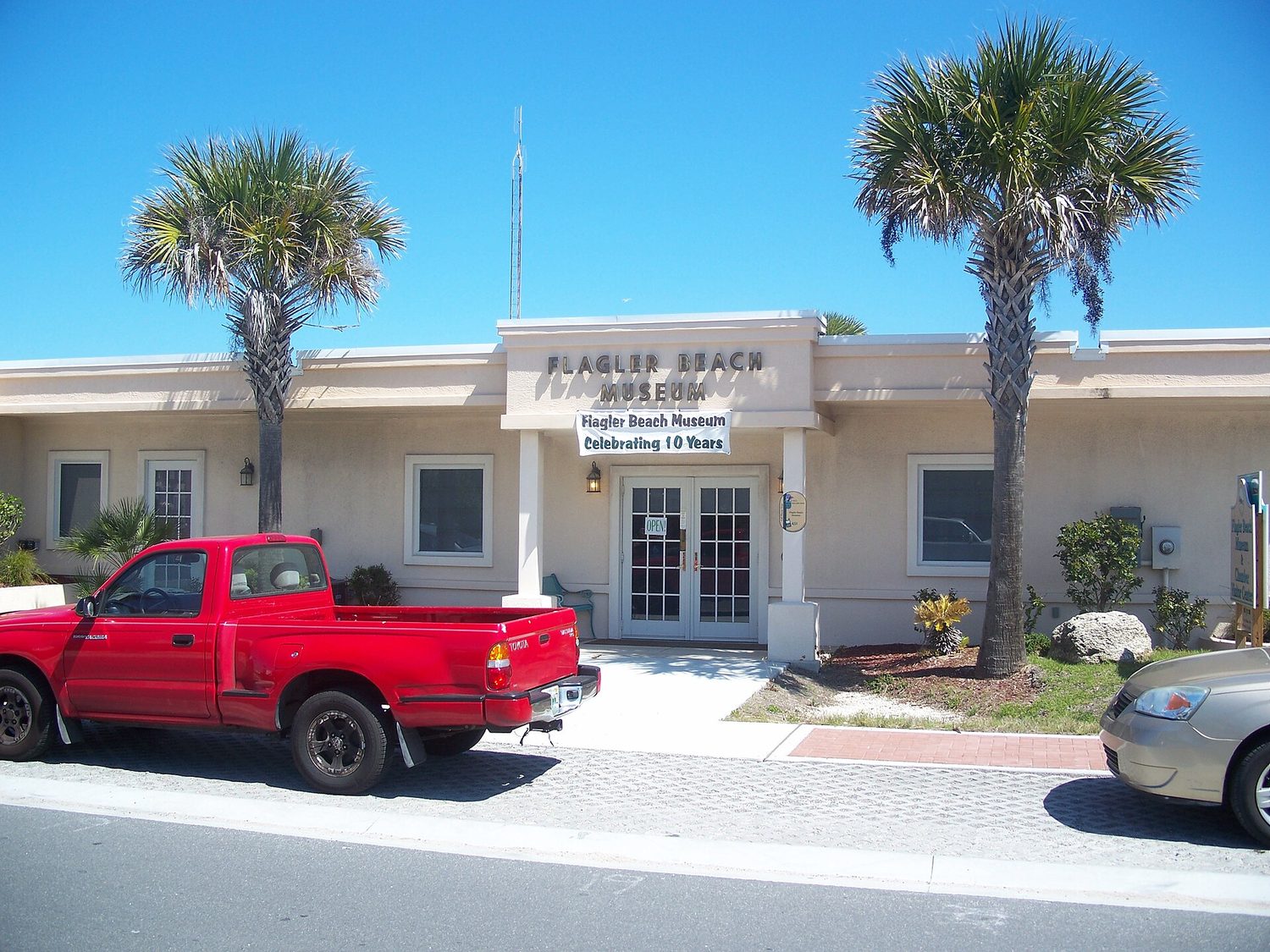
Drive through Flagler Beach and you'll notice what's missing — and that's the point. The town has a low-rise, unincorporated character, the kind of vibe you'd expect from a small coastal outpost that never got around to building a proper downtown. The Flagler Beach Historical Museum stands as a modest touchstone, a reminder that this place has a past worth preserving. The town's founding dates to Henry Flagler's era, but the built environment reflects a different impulse: restraint. The residents have resisted the resort model that transformed their neighbours, and the census numbers suggest they can afford to keep resisting. This isn't neglect. It's a choice, remade every time a development proposal comes before the town.
First Friday in Flagler Beach: A Low-Key Monthly Event
Beyond the beach, the social calendar runs on a modest beat. On the first Friday of every month, from 6pm to 9pm, Veterans Park on South 2nd Street hosts First Friday — free music, local vendors, the beach a block away. That's the scale of it. No multi-day arts festivals, no regional draw, no traffic jams. Other towns in the area chase spectacle: Palm Coast has its Creekside Music & Arts Festival, Sanford runs Porchfest, Oviedo hosts Great Day in the Country, Mount Dora has two separate arts events, and Altamonte Springs puts on Red Hot & Boom. Flagler Beach's answer is a monthly gathering in a park, and that's exactly how the residents like it.
How Flagler Beach Compares to Its Neighbours
Palm Coast, nine miles away, offers the conventional Florida coastal package: master-planned communities, golf courses, a festival circuit. Sanford, Mount Dora, and Oviedo — 48 to 57 miles inland — trade on charm, history, and annual events that pull crowds from across the region. Flagler Beach competes on none of these fronts. Its appeal is precisely its refusal to compete. The orange sand, the single pier, the low skyline, the monthly park gathering — these aren't deficiencies. They're the product of a town that looked at what its neighbours built and decided it wasn't interested. For a visit, that means a beach day without the resort markup. For a move, it means joining a community that's stable, older, and content with what it has. Flagler Beach isn't a hidden version of somewhere else. It's the only version of itself.
Common questions
- Why is the sand orange in Flagler Beach?
- The sand is orange because it's made of crushed coquina shell. This gives Flagler Beach a color no other stretch of Florida coast has, across six miles of beach broken only by a single fishing pier.
- Is Flagler Beach a touristy, developed town?
- No. Flagler Beach is deliberately undeveloped compared with its neighbors. It's a low-rise town with an unincorporated feel, and it resisted the high-rise resort development that other Florida beach towns embraced.
- What is there to do in Flagler Beach?
- You can walk the six miles of orange sand, fish from the pier, or visit the Flagler Beach Historical Museum. On the first Friday of every month, from 6pm to 9pm, there's a free event at Veterans Park with music and local vendors.
- When was Flagler Beach founded?
- Flagler Beach was incorporated on April 16, 1925. It's named for Henry Flagler, the oil and railroad magnate who did more than anyone to turn Florida's east coast into a resort.
- Is Flagler Beach a good place to live or retire?
- The median age is 58.8 years, and the population is 5,250 people. The unemployment rate is just 2.9 percent, and the median household income is $81,193. It's a quiet, low-rise beach town, not a bustling city.
- How crowded is Flagler Beach compared to nearby towns?
- Flagler Beach is much less crowded and developed than its neighbors. It has only 3,538 housing units, and 795 of those are for seasonal or recreational use. The beach is six miles of uninterrupted sand, with just one pier.
Every business named above is one we hold a listing for, and every date traces to a source on our sources page. We do not describe menus, interiors or service we have not verified. Details change — confirm before you travel.